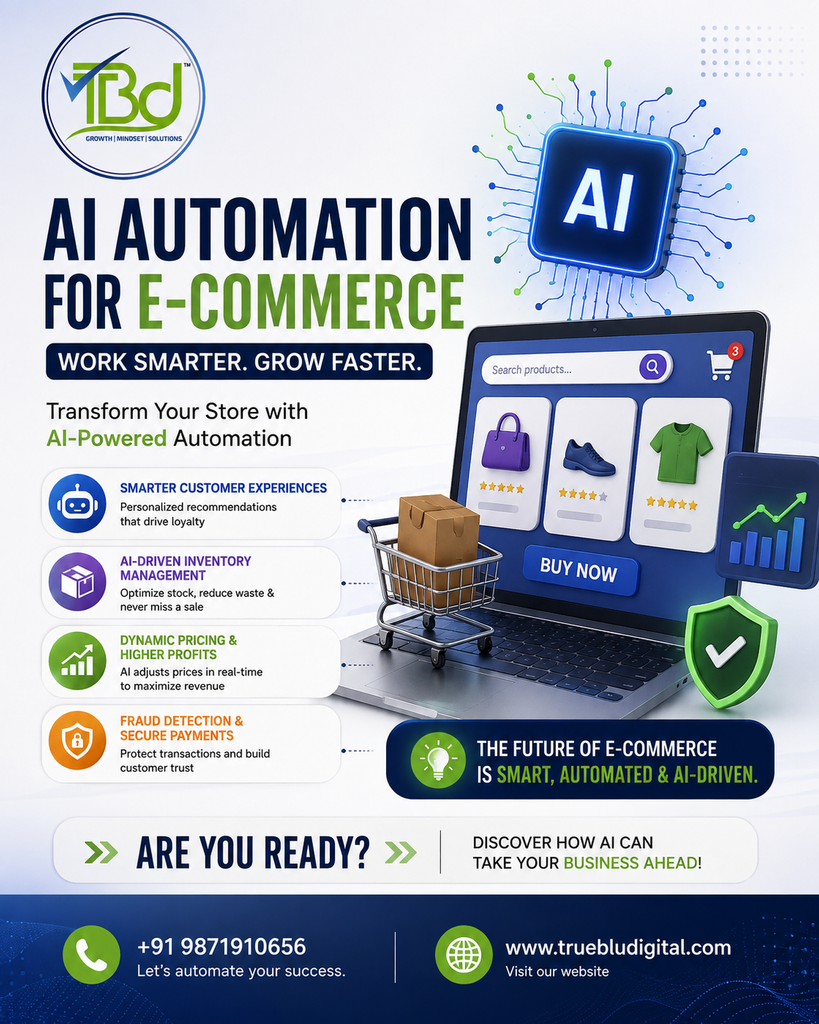
Artificial Intelligence (AI) is transforming the way ecommerce businesses attract, engage, and retain customers. From personalized recommendations to automated campaigns, AI helps online brands make faster, data-driven decisions while delivering better customer experiences. Understanding how AI can improve ecommerce marketing can give businesses a competitive advantage in an increasingly crowded digital marketplace.
1. Personalized Customer Experiences
Personalization is one of the biggest advantages of AI in ecommerce marketing. AI can analyze customer behavior, purchase history, browsing activity, and preferences to provide relevant product recommendations.
For example, an ecommerce store can show customers products based on their previous interactions. Personalized recommendations can make shopping more convenient and encourage customers to discover additional products.
2. Smarter Customer Segmentation
AI can help ecommerce marketers divide customers into meaningful groups based on behavior, interests, demographics, and purchasing patterns.
Instead of sending the same message to everyone, businesses can create targeted campaigns for different customer segments. This improves marketing relevance and can increase engagement and conversions.
3. AI-Powered Content Creation
Creating product descriptions, social media posts, email campaigns, ad copy, and blog content can take significant time. AI tools can assist marketers in generating content ideas and drafts more efficiently.
However, businesses should review and customize AI-generated content to ensure it reflects their brand voice, provides accurate information, and offers genuine value to customers.
4. Improved Advertising Performance
AI can analyze advertising data and identify patterns that help marketers optimize campaigns. It can support audience targeting, creative testing, budget allocation, and performance analysis.
By continuously monitoring campaign results, marketers can identify opportunities to improve their advertising efficiency and achieve better returns.
5. Better Customer Support
AI-powered chatbots and virtual assistants can provide quick responses to common customer questions. They can help customers find products, understand shipping information, check order status, and receive basic support.
This allows businesses to provide assistance around the clock while reducing the workload on customer service teams.
6. Predictive Analytics and Demand Forecasting
AI can analyze historical sales data and customer behavior to identify potential trends. Ecommerce businesses can use these insights to improve inventory planning, understand product demand, and make more informed marketing decisions.
Predictive analytics can help brands respond to changing customer preferences before competitors.
7. Automated Email Marketing
AI can make email marketing more effective by helping businesses determine what content to send, when to send it, and which customers should receive it.
Automated campaigns such as abandoned-cart reminders, personalized recommendations, welcome emails, and post-purchase messages can help increase customer engagement and repeat purchases.
Conclusion
AI can improve ecommerce marketing by making campaigns more personalized, efficient, and data-driven. From customer segmentation and content creation to advertising, automation, and predictive analytics, AI gives ecommerce brands powerful tools for sustainable growth.
The key is to use AI strategically while maintaining human creativity, brand authenticity, data privacy, and customer trust. When technology and thoughtful marketing work together, ecommerce businesses can create better experiences and turn more visitors into loyal customers.