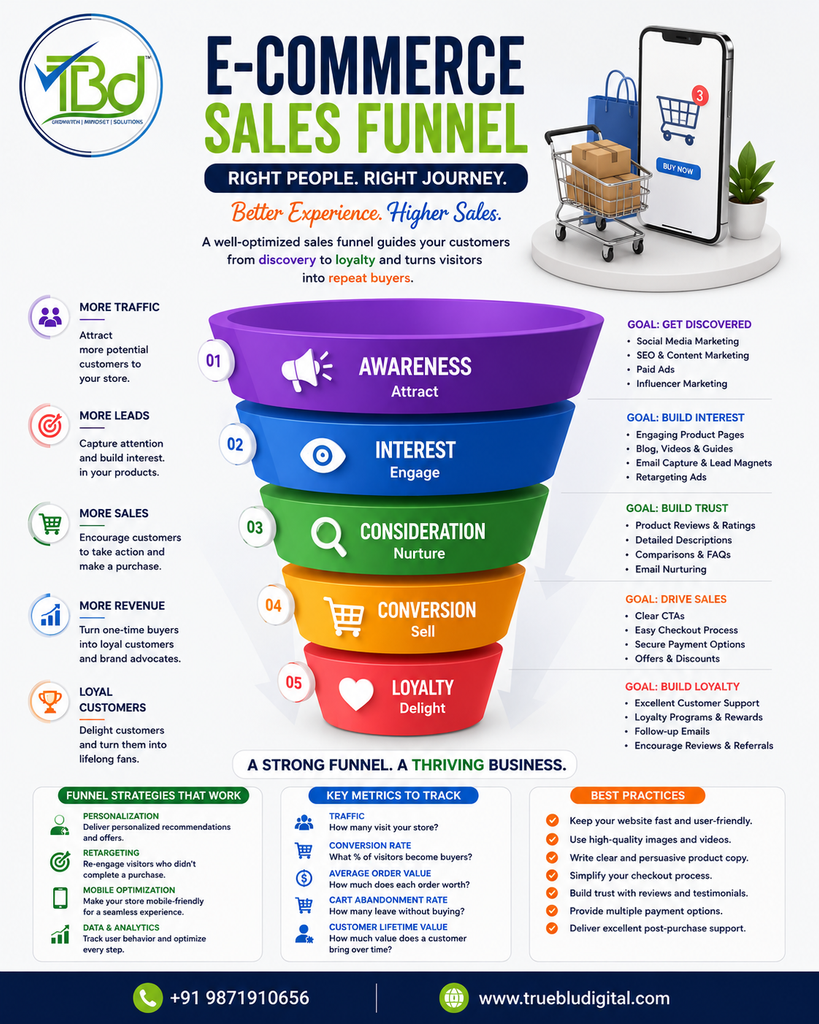
In today’s competitive ecommerce landscape, having a great product and an attractive online store is not enough. Ecommerce brands need a structured marketing strategy to attract potential customers, build trust, increase conversions, and encourage repeat purchases. A digital marketing funnel for ecommerce brands helps businesses guide customers through every stage of their buying journey.
1. Awareness: Attract the Right Audience
The first stage of an ecommerce funnel is creating awareness. Your goal is to introduce your brand and products to potential customers. SEO, social media marketing, Google Ads, influencer marketing, content marketing, and short-form videos can help increase brand visibility.
Create valuable content that answers customer questions and solves problems. Target relevant keywords so your ecommerce website can attract users actively searching for products in your niche.
2. Interest: Build Customer Engagement
Once people discover your brand, the next step is to generate interest. Your website, social media profiles, product pages, and content should clearly communicate your unique value.
Use engaging product videos, educational blog posts, customer reviews, FAQs, and informative guides. Email newsletters and social media content can also keep potential customers connected with your brand.
3. Consideration: Build Trust
Customers often compare products, prices, reviews, and brands before making a purchase. At this stage, ecommerce businesses should focus on building credibility.
Display genuine customer reviews, ratings, testimonials, product demonstrations, guarantees, and detailed product information. Retargeting campaigns can also remind visitors about products they previously viewed.
4. Conversion: Turn Visitors Into Customers
The conversion stage is where interest becomes a purchase. Your ecommerce website should provide a smooth and simple buying experience.
Optimize product pages with high-quality images, clear descriptions, competitive pricing, strong calls-to-action, and easy navigation. A fast, mobile-friendly checkout process can reduce cart abandonment and improve conversions.
5. Retention: Encourage Repeat Purchases
Getting a customer is only the beginning. Successful ecommerce brands build long-term relationships through customer retention strategies.
Use email marketing, personalized recommendations, loyalty programs, exclusive discounts, and post-purchase communication. Abandoned-cart emails can also help recover potential sales.
6. Advocacy: Turn Customers Into Brand Promoters
Satisfied customers can become powerful advocates for your business. Encourage customers to leave reviews, share products on social media, and recommend your brand to others.
Referral programs and user-generated content can help generate new customers while strengthening brand credibility.
Conclusion
A well-planned digital marketing funnel for ecommerce brands connects every stage of the customer journey—from awareness and consideration to conversion, retention, and advocacy. By combining SEO, paid advertising, social media, content marketing, email campaigns, retargeting, and conversion optimization, ecommerce businesses can attract qualified customers and achieve sustainable online growth.
The key is to continuously track performance, understand customer behavior, and optimize each stage of the funnel for better results.